
Our Chosen Category
We were sent a list of multiple categories which we could create our FMP for. The categories we could choose between are as follows:
- Re-tell, reboot, reimagine
- Fake news
- Screen life
- Discarded
- The role of the Observer – In today’s society and with the digital revolution we are constantly observing and being observed
For our FMP, we have chosen multiple categories for our project to fall into. The categories we have chosen are ‘screen life’ and ‘the role of the observer’.
Primary Research
As my project will focus on the creation of a documentary, I will be researching other documentaries and the different styles in which they are created in. I will be researching other documentaries to learn and understand the work that goes into creating this type of content.
Researching the different styles in which documentaries are created in, I found that there are five primary styles in which documentaries are made. They include:
- Expository Documentary
- Poetic Documentary
- Observational Documentary
- Reflexive Documentary
- Experimental Documentary
Expository Documentary
Expository documentaries address the viewer directly via an on-screen personality or by using off-screen narration. This documentary style generally uses interviews as primary research, as well as use of b-roll and third-party or archived footage.
Example
An example of an expository documentary is ‘The Disappearance of Madeleine McCann’, which debuted on Netflix in 2019.
Poetic Documentary
Poetic documentaries first appeared in the 1920’s and were a reaction to the content of early film. Rather than to push an argument, the poetic style of documentary is used to leave a lasting impression on the viewer.
Example
An example of a poetic documentary is ‘Samsara’, which was created in 2011 and directed by Ron Fricke.

Observational Documentary
Observational documentaries use visual language to articulate the points made in the content. This documentary style relies on using diverse camera angles, shot types, pans and tilts, as well as other technical methods in cinematography. The observational documentary often relies on capturing the spontaneity and flow of events as they occur.
Example
‘Hoop Dreams’ is set in the drama/sport genre and is an example of an observational documentary. It was created in 1994 and was directed by Steve James.

Reflexive Documentary
The reflexive documentary style is a self-conscious piece that showcases the process of the representation of the documentary. The reflexive style addresses the relationship between the filmmaker and spectators.
Example
An example of a Reflexive Documentary is ‘Man with a Movie Camera’ which was created in 1929 and directed by Dziga Vertov.

Experimental Documentary
Experimental documentaries tend not to fit accordingly to the other specific styles. Often they incorporate various elements from different documentary types.
Example
An example of an experimental documentary is ‘The Five Obstructions’ which was created in 2003 and directed by Jorgen Leth and Lars Von Trier.

My Documentary Mode
After completing research on the different styles of documentaries, I have determined that my documentary about YouTube will be created in the style of an expository documentary.
Documentary Research
When deciding on creating a documentary, I knew that I would need to complete research on an already-existing documentary and analyse the style it was created in and discuss prominent features in the documentary.
I have chosen to research the documentary ‘Louis Theroux: Dark States – Murder in Milwaukee’. The reason why I have chosen this documentary to research is mainly because it is set in the style of an expository documentary (the same style my documentary will be set in), so researching the chosen documentary will be relevant to my project. I have also decided to research this as Louis Theroux is a well-known documentary-creator and has a good record of being unbiased.
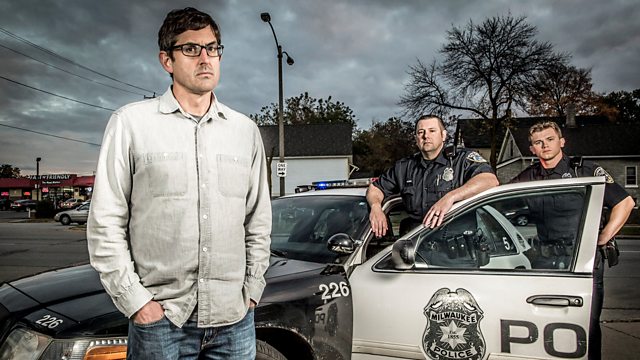
This documentary was created in 2017 and was written by Louis Theroux. It was directed by Jason Massot. In this documentary, Theroux explores the various problems that Milwaukee, Wisconsin faces. These serious problems range from extreme gun violence to the distrust of police due to racial divides.
What I learned from watching the documentary is that extreme gun violence and homocides are committed in the Milwaukee area on a daily basis. The residents of Milwaukee believe that police brutality is a massive issue, however, Theroux kept an objective stance by interviewing members of Milwaukee’s police force and members of the Milwaukee community allegidly affected by their actions. Louis Theroux keeping an unbiased viewpoint is another reason why I decided to watch a documentary he created. In my documentary, I will be delivering facts and statistics from an objective viewpoint, however, I will also be including my personal opinions toward the end of the documentary.

Due to the subject of this documentary involving gun violence, at numerous points in the documentary, Theroux attends investigations of homocide scenes. In these scenes, dead bodies are shown without any bodies being blurred for viewers. The graphic content is warned before you select the documentary to watch, however, this still had the possibility to cause controversy and backlash for Theroux. Personally, I think the inclusion of these graphic images was needed due to the seriousness of gun violence and the problems that occur in Malwaukee on a daily basis. I think that graphic content can be nessecary to show if it furthers the narrative of the story and that is why Theroux decided to included these scenes. Also, by including the graphic content, it proves that Theroux wants to capture the full story of the situation. In my documentary, I will not be showing graphic content as the subject of my project has no connection to such graphic scenes, however, I do not disagree with Theroux’s documentary including graphic content because again, it furthered the narrative.
YouTube Questionnaires
In the documentary that my group will be creating, we will cover various sections about YouTube and discuss questions that people have about the website. Topics that we will be analysing include whether or not YouTube can be a viable career path for future generations, the website and it’s influencer’s impressions of children and we will be discussing the positives and negatives of YouTube.
In order to create an accurate representation of who watches YouTube and what for, we created two seperate questionnaires. One questionnaire was created for children to answer and the other was made for older generations to complete. We posted each questionnaire on our social media accounts and had a good amount of people who completed each questionnaire.
To create the questionnaires, we used a website known as ‘SurveyMonkey’.

Younger Audience Questionnaire
For the questionnaire we created for children, we wanted to find out mainly if they watch YouTube, who they watch and we wanted to find out whether or not they wanted to be YouTubers and how difficult that career would be.
We asked the following questions in this questionnaire:
- What is your dream job? (multiple choice)
- Who is your favourite YouTuber? (text box)
- How easy do you think it is to be a YouTuber? (multiple choice)
- What are your favourite types of YouTube videos? (multiple choice)
- Do you make YouTube videos? (multiple choice)
- If not, do you want to make YouTube videos in the future? (multiple choice)
Analysing the results we received from this questionnaire, it is clear to see that a lot of children would like to be a YouTuber as a future career. In question 1, we asked what the child’s dream job is and 80% selected ‘YouTuber’ as their option.

As well as this, for question 3 we asked how hard they thought it would be to be a YouTube star and only 17% of those who answered believed it would be hard. The other 83% believed that it would be really easy to be a YouTuber or just easy, suggesting that children are not educated on how much work goes into running a successful YouTube channel.

In the questionnaire, we also asked what types of YouTube videos the person answering most enjoyed watching and 42% said that vlogging is their favourite genre of content. Vlogging has been around on YouTube for a while and it is a genre that we will be talking about in our documentary.

For our final two questions, we asked whether or not the young person answering the questionnaire made YouTube videos and if they answered no, we then asked if they were interested in making videos in the future. 75% of people who answered said that they do not currently make YouTube videos, with 25% stating that they do, however 83% of people who answered the questionnaire also said that they want to make YouTube videos in the future, showing how it is a such a big dream job for younger generations.


The following is the link to the questionnaire for the younger generation:
https://www.surveymonkey.co.uk/r/TWX66X6
Older Audience Questionnaire
As well as creating a questionnaire for a younger audience, we also created a questionnaire aimed at older generations. We created two different questionnaires to collect data from different generations to see if their viewpoints differed.
The following questions are what were listed on our questionnaire for older generations:
- What age group are you in?
- How often do you watch YouTube videos?
- What style of YouTube videos do you watch?
- Who is your favourite YouTuber and why?
- Who is your least favourite YouTuber and why?
Analysing the results of the older generation questionnaire, we determined that the majority of people who provided an answer fell into the age group of 18-24 with 60% of people who answered the questionnaire falling into this category. Ideally, we would have liked to have answers from older generations than this, but it was still a different audience from who provided answers for the questionnaire aimed at children.

Question 2 asked how often the person answering the questionnaire watched YouTube videos and the majority of the people who answered said they watch YouTube videos on a daily basis. 75% of people answered with this, meaning that a large majority use YouTube every day, proving how often it is relied on for entertainment. After this, the second most-chosen answer was ‘every few days’ with 20% of people who completed the questionnaire choosing this answer. Interestingly, there was only one case in which someone stated they watched YouTube monthly, again proving how popular YouTube is for providing entertainment.

For question 3, we asked what types of videos people prefer to watch and this was the question that provided the most varied results. The 3 leading results were vlogged content, gaming content and comedy content, with almost every other anwser having been chosen also. This proves how YouTube as a platform provides various styles of content for everyone to enjoy watching.

For the final two questions we asked the people answering the questionnaire who their favourite and least favourite YouTube creators are and why. With there being thousands of popular YouTubers, this resulted in a lot of different results, however some of the same YouTubers were chosen by multiple people.
For their favourite YouTubers, the majority of people chose the creators ‘Shane Dawson’, ‘TGFBro’ and ‘Pewdiepie’. They all chose these creators for the same reason and that is because they enjoy the style of content that they create.

For least favourite YouTuber, there were two creators in particular that were chosen the most being ‘Logan Paul’ and ‘Jake Paul’. These creators are brothers who are best known for their vlogged content and controversial actions. Due to so many people having chosen them as their least favourite YouTubers, we have chosen to research more into them indivudally and discuss them in our documentary. Had it not been for the results of this questionnaire, we likely would not have spoken about these creators.

The following is the link to the questionnaire for the older generation:
https://www.surveymonkey.co.uk/r/P6YSWBK
Secondary Research
Screen Time
Our project idea primarily falls into the category of screen time. As I will be creating a documentary about the platform ‘YouTube’, I will be researching how often various generations rely on the use of technology.
Typing in the term ‘screen time’ into Google, a number of different articles appeared that referenced the issue of using mobile phones too much. One article (written by Stuart Miles on the website ‘Pocket-Lint) discussed the screen time feature introduced by Apple that aims to help limit usage of phone users.
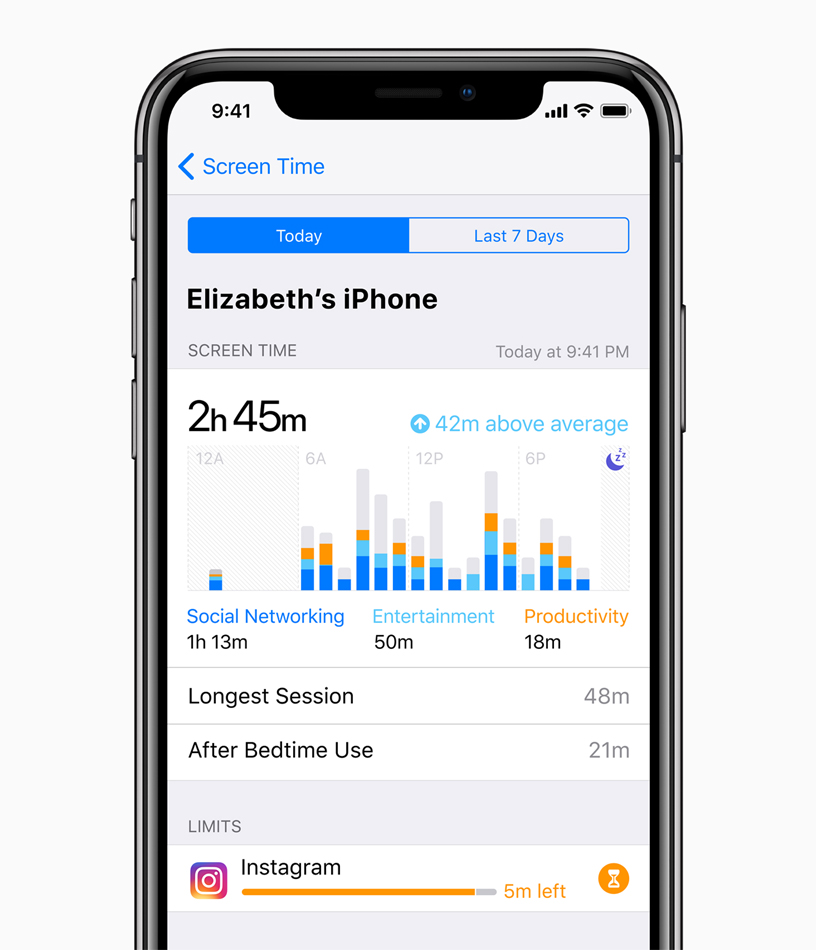
The article’s aim is to explain what Apple’s new ‘screen time’ feature is and how/why it is used.. The screen time feature that was introduced to IOS was created with the purpose of tracking the mobile phone user’s usage. The idea of this feature is that after enabling screen time, at the end of each week, a report will be available to view that will show the amount of time you’ve spent on your phone. Apple’s objective is to provide results of mobile phone usage so that the owner of the phone can then decide to make changes to their useage if they so wish to.
The screen time feature allows users to control how much they use apps on their phones by utilising the ‘app limits’ feature. Using app limits, the user will be able to control how much time they spend on specific apps. Five minutes before the app restriction takes effect, the user will be alerted of how much time they have left to use the app. They can then choose to override the app limits feature or carry on using their phone. Although this feature was created with the purpose of educating phone users more on how much time they spend attached to their screens, by allowing users to easily abandon their set limitations, this feature is made more flexible, which makes the idea of the feature redundant.
Another screen time feature that Apple included in this project is a feature known as ‘downtime’. Downtime allows for specific apps to be blocked during specific times. What sets the downtime and app limits features apart is that app limits simply reminds the user about the set limit so the user can then choose to stop using their device, whereas downtime blocks all use of an app entirely at a specific time of the day. The downtime feature is likely to be used by parents monitoring their children’s mobile phone useage so that they can’t access specific apps in the run up to bedtime.
:max_bytes(150000):strip_icc()/KidSmartphone_TanyaLittle_Getty-56a6a5ab5f9b58b7d0e4232e.jpg)
YouTube’s Younger Audience
In my documentary, I will be discussing the younger generations and how they use the YouTube platform. According to the statistic website ‘BusinessOfApps’, 149 million people use YouTube on a monthly basis, with 30 million of those being aged between 18-24. YouTube itself doesn’t offer statistics for demographics younger than 18, however YouTube does offer a substitute platform for younger audiences to use, being ‘YouTube Kids’.
YouTube Kids launched in 2015 with the objective of it being a family-friendly app for children to use. Some of the most popular creators on the kid’s app are ‘DreamWorksTV’, ‘Jim Henson TV’ and ‘Mother Goose Club’ who create content aimed at a child audience.
Although for the most part the kid’s app is safe for children to use, there have been controversies in the past surrounding the ‘child-friendly’ platform.
Earlier this year, multiple inappropriate videos were found on YouTube’s children app that depicted violence, suicide, school shootings and a number of other topics inappropriate for a child-based audience. Dr Free Hess, a mother from Florida discovered these inappropriate videos when investigating the app and was quick to respond, reporting the videos to YouTube directly and writing about the situation on her blog. YouTube took action against the inappropriate content by removing the videos from the children app. YouTube also made a public apology, stating ”We appreciate people drawing problematic content to our attention, and make it possible for anyone to flag a video. Flagged videos are manually reviewed 24/7 and any videos that don’t belong in the app are removed”.
Although action was taken against the inappropriate content by YouTube itself, situations like this have occurred on child-based videos previously, not necessarily just on the children’s app. On YouTube’s official site (a website that isn’t as child-friendly as the kid’s app), there have been situations where predators would make inappropriate comments on videos that included children. In a 20 minute video created by a YouTuber known as ‘Matt Watson’, YouTube’s predator problem was pointed out to a large audience. After the video garnered millions of views, many advertisers stopped promoting their brands on the website, losing YouTube a lot of profit. Once again, YouTube took action against the problem, stating ”Over the past week, we disabled comments from tens of millions of videos that could be subject to predatory behavior. These efforts are focused on videos featuring young minors and we will continue to identify videos at risk over the next few months.” After YouTube took action by disabling the comment sections on a lot of channels that featured young children, some advertisers returned to YouTube due to the controversy being resolved.
Creators And Their Contribution To YouTube (Character Profiles)
For our documentary, we have decided to research one YouTuber each who have found success on YouTube and maintained an audience. We will also talk about the controversies each YouTuber has faced and analyse their YouTube channel’s statistics using a website known as ‘Socialblade’ Socialblade is a video analytic sharing website where anyone can search for a channel and view their statistics. This website will allow us to see when the channel we will be researching was most popular and discuss controversies that may have lost support from their audience.
As well as researching one YouTuber individually, we will also research the same YouTuber, who as a group we have chosen to research. The creator that we chose as a group to research is known as ‘Bird Keeper Toby’ because in our documentary, we will be interviewing him and questioning him on what it is like to create YouTube videos as a career, as well as other questions that we collectively thought of to ask.
Logan Paul
For my individual work, I have chosen to research the YouTuber ‘Logan Paul’ as in his past, he has faced many controversies whilst managing to maintain a loyal audience. As well as this, Paul is a popular and relevant example of a creator who has faced problems in his career on YouTube.
Logan Paul is an American YouTuber who has amassed over 18.9 million subscribers on his YouTube channel ‘Logan Paul Vlogs’. Logan Paul creates vlog content where he films his life and the antics he gets up to. As well as this, Paul has also starred in numerous movies and created music that has been viewed hundreds of millions of times.


What is a vlog?
Vlog content is created when a vlogger (video creator) records themselves and the activity they get up to. Vlogs are a popular source of entertainment on YouTube, with thousands of creators focusing on creating this type of content. As well as Logan Paul, some other popular vloggers include: Jake Paul (his brother), Zoella, Roman Atwood, Casey Neistat and many more creators.
Audience and Controversy
Logan Paul’s main demographic for his YouTube channel and work is teenagers/children. Even though there is no way to access Paul’s channel records to confirm this, he has mentioned his young demographic on many occasions. In an interview with Good Morning America’s Michael Strahan, Paul stated ”it’s odd because, Michael, I’m 22-years-old, it’s not like I’m making content necessarily for kids. Sometimes I cuss, sometimes I make inappropriate jokes. I want to make jokes that kids my age are going to like. I am my own demographic.” In this interview, Paul references his younger demographic and speaks on how he creates content for people his own age, despite knowing the age of his audience.
As well as having a younger audience, Paul’s followers are very loyal. In his vlogs, whenever Paul would go to public events, he would get mobbed by his followers. For example, in one vlog, Paul visited Dubai to give a speech at an event and the audience who attended for that event was massive. Another example of Paul’s followers being loyal is whenever they support him for his controversial actions. In December 2017, Paul visited Japan and behaved very disrespectfully, with himself and friends running around cities screaming for no reason other than to create content for their videos and disrespecting their culture. As well as this, during his visit to Japan, Paul visited Aokigahara Forest (also known as the suicide forest) and filmed a dead hanging body, laughing in the situation and then uploading the video to YouTube for everyone to see. Naturally, Paul received huge backlash for his actions, yet there were still some child fans of his who condoned his actions, saying he did ”nothing wrong”.
Since the events at the Aokigahara Forest took place, Paul received backlash from millions over the internet and took a break, not posting any updates on the situation for weeks. Before his break, he did however create an apology video about the situation, which has amassed over 55 million views, with over 2.2 million people having left a dislike on the video.
In the weeks that followed, Paul attempted to redeem the situation by creating a short documentary that followed him in finding help and getting educated more on suicide. He also promised to donate a million dollars to suicide prevention charities. A lot of people forgave Paul for his previous actions due to him attempting to better the situation, however others still held his prior actions against him.
Refering once again to ‘Socialblade’ to view the statistics for Logan Paul’s channel, it can be seen that after this situation, Paul had lost a lot of his popularity. In January 2018, he had gained just over 1 million new subscribers to his YouTube channel, however, one month later in February (the month in which Paul gained backlash for his actions), this number had more than halved, with Paul gaining 460,000 new subscribers. Although this number in itself is still substantial, compared to what Paul previously maintaned, the number is seriously reduced. Since February 2018, Paul’s channel has been seeing lesser success, with his numbers continuing to decrease.

After his dreadful actions in Japan, Paul not only faced backlash from internet personalities, celebrities and previous fans of his work, but also the mainstream media. Countless articles had been produced to show the bad side of YouTubers, with Paul being the main example. Although he later redeemed himself for his actions, Paul still indirectly ruined the image of what it is to be a YouTuber. Many people still use Paul as an example for why internet stars are bad, however others choose to make their own judgements. Ultimately, since Paul’s situation with the ‘suicide forest’, he has lost popularity on YouTube, as well as having had his reputation ruined and projects of his being cancelled. This goes to show that serious backlash and problems can occur if a YouTuber makes a wrong decision, proving that the career is not as easy as it seems.
Bird Keeper Toby
For the second creator, we will all be researching the same YouTuber. As previously stated, our chosen creator is ‘Bird Keeper Toby’ as we will be interviewing him in our documentary.
Bird Keeper Toby is a British YouTuber who has amassed over 31 million views and 200,000 subscribers on his YouTube channel. He focuses on creating gaming content, specifically he makes videos on the ‘Pokemon’ franchise.

Toby created his YouTube channel in December of 2014. He consistently gains between 10,000-20,000 views on each video he uploads, with his highest viewed video having over 840,000 views. Bird Keeper Toby’s audience demographic is fans of gaming and the ‘Pokemon’ franchise.
Toby has not been involved in any controversies of which he has faced backlash for. He sustains an image of his channel being family-friendly, avoiding use inappropriate language or swear words. By sustaining a clean image on his channel, parents feel safer allowing their children to watch Toby’s channel and advertisers on YouTube will allow adverts to play on his videos, creating him revenue.
Due to his clean image and popularity, Toby has also been invited to attend various events as a special guest. An example of this is him being announced as a guest on the ‘Summer in the City’ event’s website. Summer in the City is the UK’s biggest YouTube convention, with tens of thousands of attendees, so Toby being a guest is very impressive due to not a lot of creators being approached with a guesting opportunity for the event.

Due to the family-friendly nature of his channel, Toby has also had opportunities working with the official Pokemon company. In 2018, before the release of the ‘Pokemon Let’s Pikachu’ and ‘Pokemon Let’s Go Eevee games (which sold over 10 million copies worldwide), Toby was given the opportunity to play the games early and create a video about them. The video he created is now his most popular, with over 840,000 views. On YouTube, family-friendly channels tend to receive higher advertisement rates and are more likely to be approached with brand deals, so Toby is an example of a family-friendly creator and the rewards of choosing to sustain a channel like this.
In terms of channel statistics, Toby peaked in viewership in December of 2016, sustaining 2.45 million views. Since then, he has not maintained viewership like this, however in October of 2018. he received 1.34 million views in one month. Looking at his channel and researching why this viewership increase may have occurred, I found that his most popular video (which as stated previously has garnered over 840,000 views) was uploaded at the end of September. Although this video was uploaded in September, the video itself gained traction in viewership in October, helping Toby to get 1.34 million total views on his channel for this month. The video uploaded, titled ‘Pokemon Let’s Go Pikachu, Let’s Go Eevee FIRST Let’s Play EVER! Episode #1/3 GAMEPLAY’ was created in collaboration with the official Pokemon company to help promote their new games before their release. This collaboration proved to help Toby maintain a high number of viewership, further proving that brand deals and working with large companies can help YouTube creators. Had Toby’s YouTube channel not been family-friendly, this collaboration opportunity will not likely have occurred as ‘Pokemon’ have a reputation to maintain. This shows how creating content with no cursive language can help a channel to grow and thrive.


During idea generation for our documentary, we had planned to interview a YouTuber to investigate what it is like to maintain such a large channel. Having met Toby in the past and having multiple conversations with him, I reached out to him to request an interview, to which he agreed. We interviewed Toby via a webcam call, so something I feared was potentially having bad video quality, however thankfully we captured good quality for the interview. To get a good knowledge of the experiences YouTubers face, we generated various questions to ask him. The questions were as follows:
- Why did you start making videos on YouTube?
- How difficult is it to earn a living on the platform?
- How many hours do you put into creating videos every week?
- What don’t you like about YouTube? Or something you think could be improved on.
- Why did you decide to make your channel based on Pokémon?
- What’s the hardest part of making videos?
- Do negative comments affect you?
- Would you say YouTube is harder or easier than a regular 9-5 job?
- Would you recommend YouTube as a career path for future generations?
- You’ve been to official Pokemon and YouTube events. How do these opportunities arise?
Conclusion of YouTuber Research
In conclusion, after researching two very different YouTubers I have found that there are various ways to grow and sustain an audience on the platform. The YouTubers I researched created very different content, showing how on YouTube, various genres of videos are uploaded. I also found that controversy surrounding a channel can ruin it’s reputation and viewership. In the case of Logan Paul filming a dead body in the ‘suicide forest’, Paul not only faced backlash from the media, members of his audience and other creators, but he also faced over a 50% decrease in subscriber growth and since the incident, has not managed to generate the same amount of views or subscriber growth since before the incident occurred. Researching Bird Keeper Toby, I learned that maintaining a a family-friendly channel and staying out of controversy can create more opportunities to work with bigger companies and can get more brand deals. Although both YouTuber’s channels are different, they have both managed to grow their audience substantially creating the content they wish to produce. In our documentary, we will interview more YouTubers to get a bigger range of answers and will reflect on how each channel has grown in creating an audience.
Producing Title Cards (Research in Practice)
Part of my responsibility for this project is to create the title cards that we will be using to introduce each new person in the ‘interviews’ segment. To create the title cards, I will be using Adobe After Effects.
First, I created a new composition for the project to be made on.

After this, I used the ‘grid and guide options’ tool to create a guideline for my project. I used this in order to make the title cards proportionate and to ensure they would be placed where they need to be in the finished project.

Next, I needed to create a rectangle to use for the title card. Before doing this, I used the ruler tool to mark out where the shape would be placed. Using this tool was helpful because when I created the rectangle, it would automatically lock to the set guidelines, which in turn made my work look cleaner.

I then duplicated the rectangle shape multiple times and changed each rectangle a darker shade of red than the other. I did this to add a bit of style and colour to the title card. The reasoning behind why I decided on red was because that colour is heavily connected to YouTube, with the logo and other features of the website being created in that colour.

Next, I added text to the title card. The text represents each person we interviewed for the project. As well as including their real name, I decide to add the name of their YouTube channel, accompanied by the YouTube logo.

After adding text, I was ready to animate my title card. To do this, I had to create a new composition and drag my title card onto the newly-created composition.

I then moved the title card off screen using the selection tool. I did this so that I could begin keyframing and move the title card onto the project. To create a keyframe, I pressed on the blue stopwatch logo and adjusted where each keyframe would go on my timeline.

As this was a basic animation, I only needed to use two keyframes. To create a new keyframe, I selected the blue diamond shape on the bottom-left side of the program. I adjusted these keyframes on the timeline and worked out how far apart each keyframe needed to be.

After completing my animation for the title cards, I rendered the project and then uploaded it to YouTube as evidence of my work.
 Dan Parfitt
Leave a comment